Review: Yi-Ling Liu’s Portrait of China’s Digital Dissidents in The Wall Dancers
When hip-hop artist Kafe Hu appeared on The Rap of China, the long-simmering tension between his craft and his livelihood reached a boiling point. In accordance with regulators’ demands, he stopped wearing foreign shoes (Nike) on stage, covered his tattoos, censored his lyrics, and agreed to submit pre-taped recordings of his performances for approval.
A younger Hu would probably have told the authorities what they could do with their censorship demands. But now, he had a child to think about. It would have been irresponsible to scoff at commercial recognition.


The recent release of state-of-the-art Chinese AI models Kimi K3 and Z.ai’s GLM 5.2 has caused yet another “shock” for those who thought Chinese labs weren’t focused on the frontier of the technology, or even that they had fallen far behind. This misconception derives from analyses that take Beijing’s focus on deploying AI for economic growth as a sign that China is “not AGI-pilled.”
In reality, Chinese AI labs are pursuing Artificial General Intelligence (AGI), often with an existential emphasis. In parallel, central level officials are supporting such efforts, even if tacitly so.
Second Place Was Never Enough:
China is Chasing AGI


Jade Gu met her boyfriend online. Gu, who’s 26 and studies art theory in Beijing, was playing on her phone when she saw Charlie. She was deep in an otome game, a romance-driven video game where women are the protagonists. Charlie was a character.
Some otome players date multiple men simultaneously, but Gu fell for Charlie—a tall, confident character with silver hair. She found the game’s dialog system frustrating, though. She could interact with Charlie only through predetermined questions and answers. Then she came across an ad for a platform called Xingye (星野) that lets people customize an AI companion. Gu decided to try to re-create Charlie.
Your AI Boyfriend Lives in China
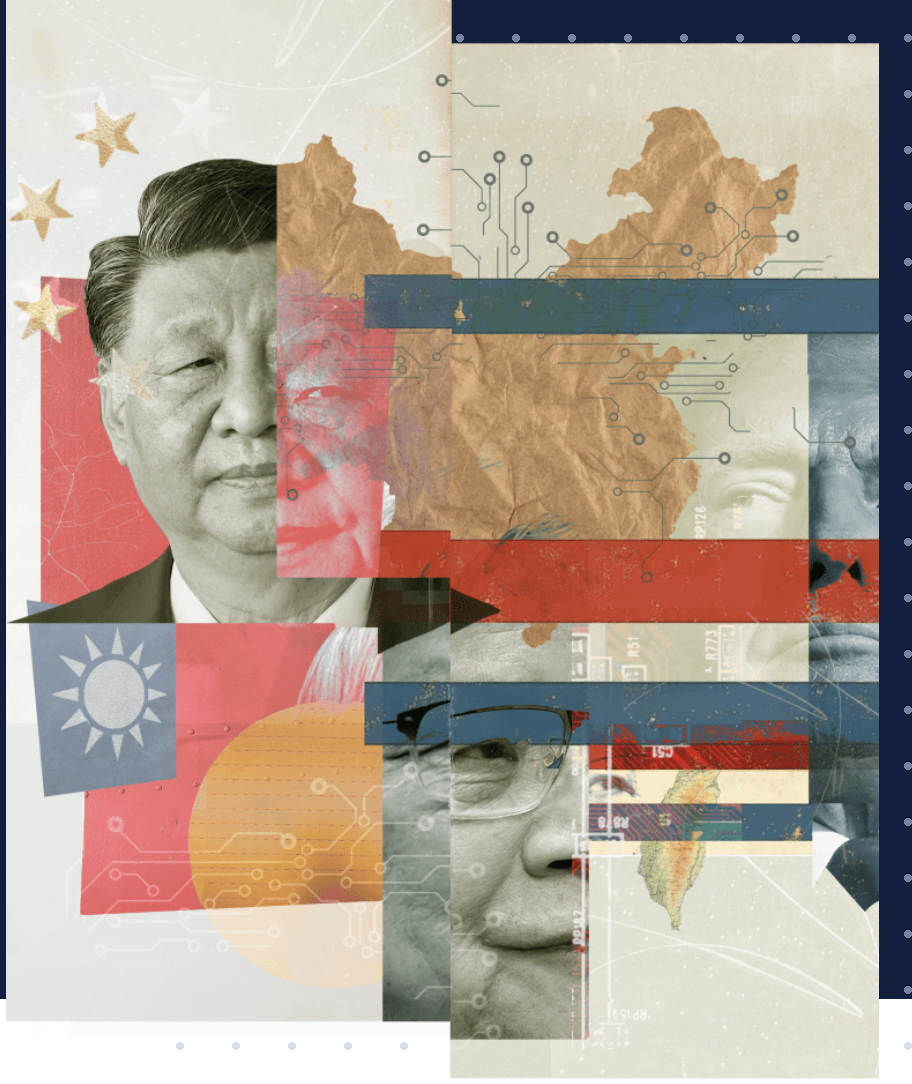
The three women had paid approximately $40 to spend their Sunday here, undergoing basic training to prepare for a possibility every Taiwanese citizen has an opinion about: Will China invade?
Taiwan’s “Silicon Shield” Could be Weakening

Meta Accused of Torrenting Porn to Advance Its Goal of AI ‘Superintelligence’
Strike 3 Holdings is suing Meta in federal court, alleging the tech giant pirated copyrighted adult videos to train its AI models.

In the five years since his original TikTok ban, the President has gone from looking at the app as a source of Chinese influence to a major American media outlet that he wants to influence.
Why Trump Changed His Tune on TikTok

The government is inviting snitches to report on “historical nihilism.”
China’s War on History is Growing

How Shein Cuts Costs by Relying on Precarious Gig Workers in China
Gig workers in China are posting videos highlighting the allegedly precarious working conditions powering Shein's aggressive growth.